1. Expand Government-Supported Insurance
- Broaden eligibility for public schemes so low-income families, gig workers, and informal-sector workers are covered.
- Automatically enroll eligible people to reduce paperwork barriers. Downloads
2. Regulate Premium Prices
- Cap premium increases so insurers can’t raise prices faster than incomes.
- Standardize basic plans with essential coverage at controlled prices.
3. Subsidies for Low- and Middle-Income Groups
- Offer sliding-scale subsidies based on income, not just poverty status.
- Provide tax credits or direct discounts to make monthly premiums affordable.
4. Encourage Competition Among Insurers
- Allow more insurers to enter the market with simplified regulations.
- Support non-profit and cooperative insurance models that prioritize care over profit.
5. Strengthen Preventive and Primary Care
- Cover preventive services (checkups, vaccinations, screenings) fully.
- Preventive care reduces expensive hospital treatments later, lowering overall costs.
6. Employer and Community-Based Coverage
- Incentivize small businesses to offer group insurance.
- Support community or occupation-based insurance pools (farmers, drivers, freelancers).
7. Transparency in Healthcare Costs
- Require hospitals and insurers to clearly show prices and coverage details.
- Transparency helps people choose affordable plans and limits overcharging.
8. Use Digital Health Systems
- Online enrollment, digital claims, and telemedicine reduce administrative costs.
- Lower costs = cheaper insurance premiums.
Bottom line:
Affordable health insurance isn’t just about cheaper plans—it’s about smart regulation, public support, prevention, and fair pricing, so no one has to choose between health and money.
If you want, I can help turn this into a speech, policy proposal, debate answer, or essay tailored to your country or exam format.
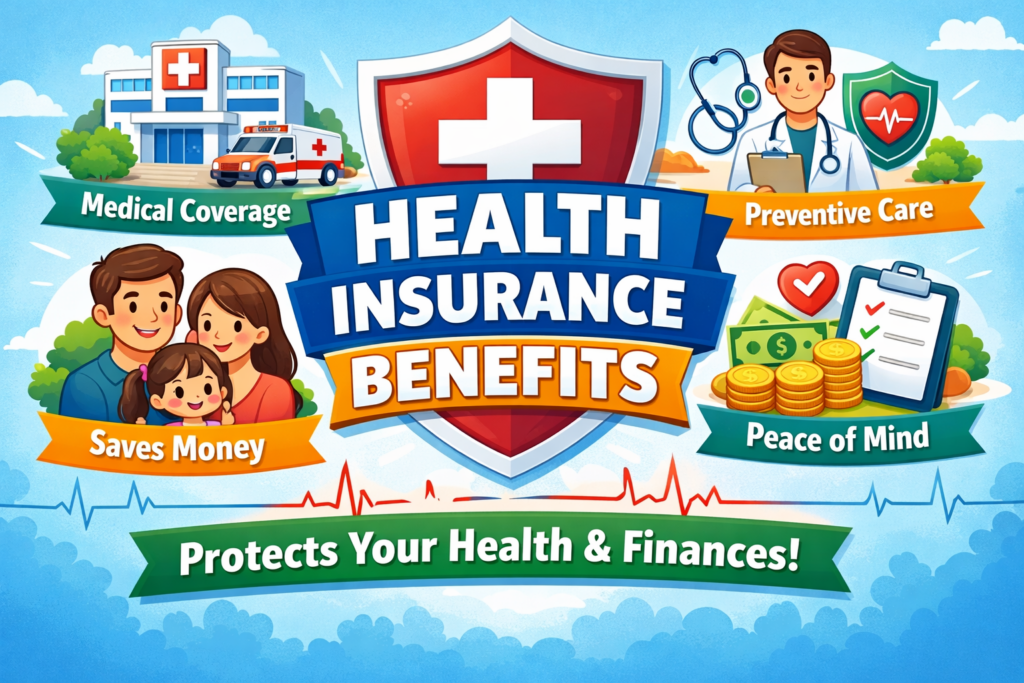
Here are the key benefits of health insurance, explained simply:
🏥 Financial Protection
- Covers expensive hospital bills, surgeries, and treatments
- Prevents sudden medical costs from draining savings or causing debt
💊 Access to Quality Healthcare
- Enables treatment at good hospitals and clinics
- Encourages people to seek care early instead of delaying due to cost
🩺 Preventive Care
- Covers regular checkups, vaccinations, and screenings
- Helps detect diseases early, when treatment is cheaper and easier
🚑 Emergency Coverage
- Pays for emergency services and hospitalization
- Reduces stress during medical emergencies
👨👩👧 Family Security
- Protects the whole family under one policy
- Useful for children, elderly parents, and dependents
🧠 Mental Peace
- Reduces worry about medical expenses
- Helps people focus on recovery, not finances
📈 Long-Term Savings
- Helps manage chronic illnesses like diabetes or heart disease
- Prevents long-term financial loss due to ongoing treatment
🌍 Social and Economic Benefits
- Healthier people are more productive
- Reduces pressure on public hospitals and emergency care systems
In short:
Health insurance protects your health, money, and peace of mind.
If you want this rewritten for a school exam answer, short paragraph, poster, or speech, just tell me 👍